Shop to the Field: Why Mobile Repair is a Lifesaver During Lexington’s Busy Season
When busy season hits Lexington, there is no such thing as downtime. For large-scale agricultural operations moving through planting or harvest windows, and for utility and logging crews working long hours across Eastern Oregon, every piece of equipment has a job to do. If a combine, excavator, skidder, or service truck goes down, production does not just slow. It can stop completely.
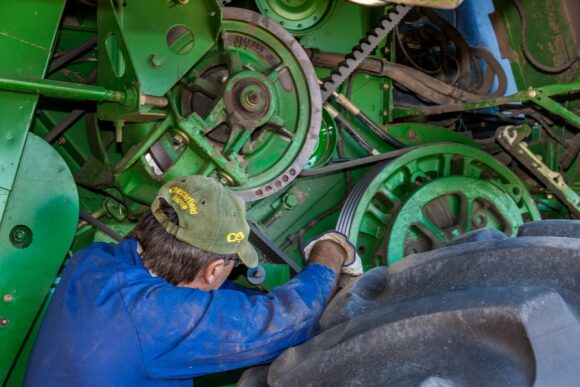
In Morrow County, equipment rarely fails at a convenient time or location. It breaks down in the middle of a wheat field outside Lexington, along a rural utility corridor, or deep in timber operations where hauling it back to the shop is not practical. That is where mobile heavy equipment repair in Lexington becomes more than a convenience. It becomes a lifeline.
At Bailey Heavy Equipment Repair, we have built our service model around that reality. During peak season, getting from the shop to the field quickly can mean the difference between staying on schedule and losing critical work hours.
The High Cost of Downtime in Eastern Oregon
Agricultural and industrial operations in Morrow County operate on tight timelines. Dryland wheat farmers cannot afford to miss weather windows. Utility crews working on infrastructure projects must meet contract deadlines. Logging operations rely on continuous movement of equipment to maintain productivity.
When a machine fails, the cost is immediate. Labor continues. Crews wait. Schedules slip. In some cases, weather conditions shift before repairs are complete, compounding delays.
Transporting heavy equipment from a remote site back to a repair facility often involves specialized hauling and additional labor. In busy season, that time adds up quickly. Mobile heavy equipment repair in Lexington eliminates that transport delay by bringing skilled technicians directly to the problem.
On-site diesel repair in Oregon allows work to resume faster because the repair happens where the machine sits.
Why Field Service Trucks Are Built for Rural Reality
Field service trucks in Eastern Oregon are not just pickup trucks with toolboxes. They are fully equipped mobile repair units designed to handle serious mechanical work in remote locations.
Our field service trucks carry diagnostic equipment, welding tools, hydraulic components, and essential parts to address a wide range of issues. Whether the problem is a failed hydraulic line, a cracked bracket, or a diesel engine performance issue, we arrive prepared.
Operating from Pendleton to Lexington equipment service areas means covering large stretches of rural terrain. Roads can be rough. Job sites can be miles from paved access. Mobile repair units must be self-sufficient and capable of functioning without shop infrastructure.
For large agricultural operations, this level of readiness is essential. Machines rarely break down within easy reach of town. They fail in the middle of fields or on access roads where conventional repair options are limited.
On-Site Hydraulic Hose Repair and Immediate Solutions
One of the most common failures during busy season is hydraulic hose damage. A ruptured hose can bring equipment to a halt instantly. Waiting days for a replacement line is not an option when harvest or logging operations are underway.
On-site hydraulic hose repair allows damaged lines to be replaced quickly, restoring pressure and function without removing the machine from the field. This immediate response minimizes downtime and prevents secondary damage caused by fluid loss or contamination.
Utility and logging crews often operate heavy machinery in demanding terrain. Hydraulic systems experience constant stress. Having access to emergency equipment repair on location ensures that a simple hose failure does not derail an entire day’s production.
Rural diesel repair in Morrow County depends on being able to address these issues immediately, not after transport to a distant shop.
Field Welding and Fabrication When It Matters Most
In rugged working environments, structural damage is sometimes unavoidable. Cracked frames, broken brackets, or damaged guards can take equipment out of service just as quickly as mechanical failures.
Field welding and fabrication services provide a critical solution. Instead of towing machinery to a fabrication shop, repairs are performed directly on-site. This capability is especially valuable for logging crews working deep in wooded areas or agricultural operators managing multiple machines across large acreages.
Field welding and fabrication restore structural integrity without the logistical challenges of moving heavy equipment long distances. For operations spanning Pendleton to Lexington equipment service regions, this flexibility keeps projects moving forward.
Emergency equipment repair often requires both mechanical expertise and fabrication capability. Combining those skills in a mobile format gives operators confidence that problems can be resolved quickly.
The Advantage of 24/7 Mobile Mechanic Availability
Equipment failures rarely respect standard business hours. During harvest, agricultural operations may run well into the night. Utility crews may work extended shifts to meet deadlines. Logging operations often begin before sunrise.
A 24/7 mobile mechanic ensures that help is available when breakdowns occur, not just during office hours. This availability is especially critical during Lexington’s busiest seasons, when every hour of machine uptime matters.
On-site diesel repair in Oregon at night or during early morning hours allows operations to resume without losing entire workdays. Instead of waiting until morning to begin diagnostics, repairs can start immediately.
Mobile heavy equipment repair in Lexington becomes even more valuable when response time aligns with operational urgency.
Supporting Large-Scale Agricultural Operations
Large agricultural operations in Morrow County rely on coordinated fleets of machinery. Combines, tractors, sprayers, and support trucks must operate in sync. When one machine fails, it can disrupt the entire workflow.
Mobile repair services provide rapid response to keep the fleet functioning as a unit. On-site hydraulic hose repair, diesel diagnostics, and emergency equipment repair ensure that bottlenecks are resolved quickly.
Because agricultural work often occurs across expansive acreage, rural diesel repair in Morrow County must be flexible and mobile. Bringing skilled technicians directly to the field minimizes interruption and maximizes efficiency.
Keeping Utility and Logging Crews on Schedule
Utility and logging crews operate in some of the most challenging terrain in Eastern Oregon. Remote job sites, uneven ground, and unpredictable conditions put constant strain on equipment.
Field service trucks in Eastern Oregon bridge the gap between the shop and the job site. By delivering on-site diesel repair in Oregon, welding, fabrication, and hydraulic services directly to these remote locations, mobile repair eliminates unnecessary transport and delay.
From Pendleton to Lexington equipment service areas, crews benefit from knowing that mechanical support is never far away.
From Shop to Field, Without Missing a Beat
Busy season in Lexington does not allow for extended downtime. Whether you are managing hundreds of acres of wheat or overseeing infrastructure and logging projects across Morrow County, your equipment must perform consistently.
Mobile heavy equipment repair in Lexington provides the flexibility and responsiveness that rural operations demand. On-site diesel repair in Oregon, field welding and fabrication, emergency equipment repair, and 24/7 mobile mechanic availability combine to create a support system built for Eastern Oregon’s realities.
At Bailey Heavy Equipment Repair, our commitment is simple. When your machine goes down, we go to it. From on-site hydraulic hose repair to comprehensive rural diesel repair in Morrow County, we bring the shop to the field so you can keep moving forward, no matter how busy the season becomes.