Skip to content
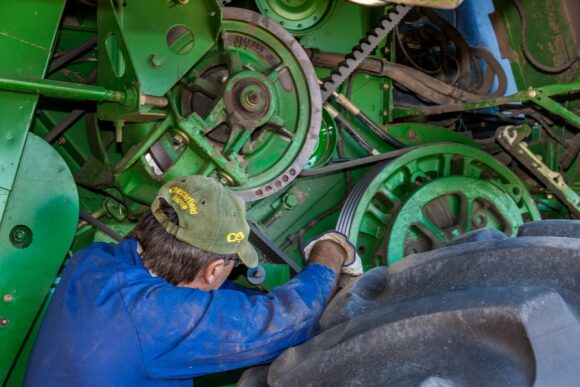
When busy season hits Lexington, there is no such thing as downtime. For large-scale agricultural operations moving through planting or harvest windows, and for utility and logging crews working long hours across Eastern Oregon, every piece of equipment has a job to do. If a combine, excavator, skidder, or service truck goes down, production does not just slow. It can stop completely.
In Morrow County, equipment rarely fails at a convenient time or location. It breaks down in the middle of a wheat field outside Lexington, along a rural utility corridor, or deep in timber operations where hauling it back to the shop is not practical. That is where mobile heavy equipment repair in Lexington becomes more than a convenience. It becomes a lifeline.
At Bailey Heavy Equipment Repair, we have built our service model around that reality. During peak season, getting from the shop to the field quickly can mean the difference between staying on schedule and losing critical work hours.
The High Cost of Downtime in Eastern Oregon
Agricultural and industrial operations in Morrow County operate on tight timelines. Dryland wheat farmers cannot afford to miss weather windows. Utility crews working on infrastructure projects must meet contract deadlines. Logging operations rely on continuous movement of equipment to maintain productivity.
When a machine fails, the cost is immediate. Labor continues. Crews wait. Schedules slip. In some cases, weather conditions shift before repairs are complete, compounding delays.
Transporting heavy equipment from a remote site back to a repair facility often involves specialized hauling and additional labor. In busy season, that time adds up quickly. Mobile heavy equipment repair in Lexington eliminates that transport delay by bringing skilled technicians directly to the problem.
On-site diesel repair in Oregon allows work to resume faster because the repair happens where the machine sits.
Why Field Service Trucks Are Built for Rural Reality
Field service trucks in Eastern Oregon are not just pickup trucks with toolboxes. They are fully equipped mobile repair units designed to handle serious mechanical work in remote locations.
Our field service trucks carry diagnostic equipment, welding tools, hydraulic components, and essential parts to address a wide range of issues. Whether the problem is a failed hydraulic line, a cracked bracket, or a diesel engine performance issue, we arrive prepared.
Operating from Pendleton to Lexington equipment service areas means covering large stretches of rural terrain. Roads can be rough. Job sites can be miles from paved access. Mobile repair units must be self-sufficient and capable of functioning without shop infrastructure.
For large agricultural operations, this level of readiness is essential. Machines rarely break down within easy reach of town. They fail in the middle of fields or on access roads where conventional repair options are limited.
On-Site Hydraulic Hose Repair and Immediate Solutions
One of the most common failures during busy season is hydraulic hose damage. A ruptured hose can bring equipment to a halt instantly. Waiting days for a replacement line is not an option when harvest or logging operations are underway.
On-site hydraulic hose repair allows damaged lines to be replaced quickly, restoring pressure and function without removing the machine from the field. This immediate response minimizes downtime and prevents secondary damage caused by fluid loss or contamination.
Utility and logging crews often operate heavy machinery in demanding terrain. Hydraulic systems experience constant stress. Having access to emergency equipment repair on location ensures that a simple hose failure does not derail an entire day’s production.
Rural diesel repair in Morrow County depends on being able to address these issues immediately, not after transport to a distant shop.
Field Welding and Fabrication When It Matters Most
In rugged working environments, structural damage is sometimes unavoidable. Cracked frames, broken brackets, or damaged guards can take equipment out of service just as quickly as mechanical failures.
Field welding and fabrication services provide a critical solution. Instead of towing machinery to a fabrication shop, repairs are performed directly on-site. This capability is especially valuable for logging crews working deep in wooded areas or agricultural operators managing multiple machines across large acreages.
Field welding and fabrication restore structural integrity without the logistical challenges of moving heavy equipment long distances. For operations spanning Pendleton to Lexington equipment service regions, this flexibility keeps projects moving forward.
Emergency equipment repair often requires both mechanical expertise and fabrication capability. Combining those skills in a mobile format gives operators confidence that problems can be resolved quickly.
The Advantage of 24/7 Mobile Mechanic Availability
Equipment failures rarely respect standard business hours. During harvest, agricultural operations may run well into the night. Utility crews may work extended shifts to meet deadlines. Logging operations often begin before sunrise.
A 24/7 mobile mechanic ensures that help is available when breakdowns occur, not just during office hours. This availability is especially critical during Lexington’s busiest seasons, when every hour of machine uptime matters.
On-site diesel repair in Oregon at night or during early morning hours allows operations to resume without losing entire workdays. Instead of waiting until morning to begin diagnostics, repairs can start immediately.
Mobile heavy equipment repair in Lexington becomes even more valuable when response time aligns with operational urgency.
Supporting Large-Scale Agricultural Operations
Large agricultural operations in Morrow County rely on coordinated fleets of machinery. Combines, tractors, sprayers, and support trucks must operate in sync. When one machine fails, it can disrupt the entire workflow.
Mobile repair services provide rapid response to keep the fleet functioning as a unit. On-site hydraulic hose repair, diesel diagnostics, and emergency equipment repair ensure that bottlenecks are resolved quickly.
Because agricultural work often occurs across expansive acreage, rural diesel repair in Morrow County must be flexible and mobile. Bringing skilled technicians directly to the field minimizes interruption and maximizes efficiency.
Keeping Utility and Logging Crews on Schedule
Utility and logging crews operate in some of the most challenging terrain in Eastern Oregon. Remote job sites, uneven ground, and unpredictable conditions put constant strain on equipment.
Field service trucks in Eastern Oregon bridge the gap between the shop and the job site. By delivering on-site diesel repair in Oregon, welding, fabrication, and hydraulic services directly to these remote locations, mobile repair eliminates unnecessary transport and delay.
From Pendleton to Lexington equipment service areas, crews benefit from knowing that mechanical support is never far away.
From Shop to Field, Without Missing a Beat
Busy season in Lexington does not allow for extended downtime. Whether you are managing hundreds of acres of wheat or overseeing infrastructure and logging projects across Morrow County, your equipment must perform consistently.
Mobile heavy equipment repair in Lexington provides the flexibility and responsiveness that rural operations demand. On-site diesel repair in Oregon, field welding and fabrication, emergency equipment repair, and 24/7 mobile mechanic availability combine to create a support system built for Eastern Oregon’s realities.
At Bailey Heavy Equipment Repair, our commitment is simple. When your machine goes down, we go to it. From on-site hydraulic hose repair to comprehensive rural diesel repair in Morrow County, we bring the shop to the field so you can keep moving forward, no matter how busy the season becomes.
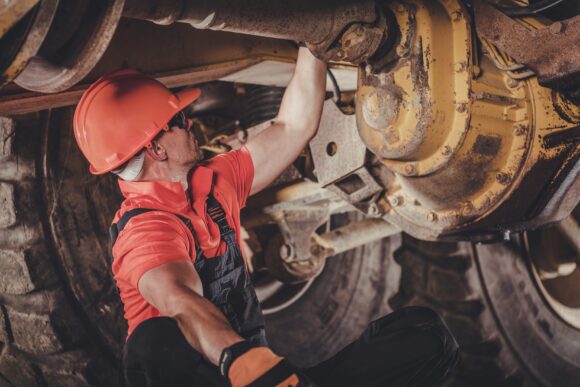
Spring in Morrow County is a season of opportunity and frustration rolled into one. For dryland wheat farmers around Lexington and Heppner, it signals critical fieldwork windows. For excavation contractors working along I-84 corridors or rural access roads, it means projects ramp up fast. But it also means mud. Thick, heavy, Eastern Oregon mud that clings to tracks, packs into rollers, and adds strain to every moving component under your machine.
At Bailey Heavy Equipment Repair, we see the aftermath every year. Machines that made it through winter without issue suddenly show accelerated wear. Undercarriages take the brunt of it. If you are running dozers, track loaders, or excavators in saturated ground, protecting your undercarriage is not optional. It is the difference between staying productive and scheduling costly downtime for heavy equipment repair in Lexington, OR.
Why Spring Mud Is So Hard on Undercarriages
Morrow County soil has a personality. When it is dry, it is dusty and abrasive. When it is wet, it becomes dense and adhesive. That combination creates ideal conditions for undercarriage stress.
As mud builds up inside the track system, it increases weight and resistance. Tracks have to work harder to rotate. Rollers and idlers are forced to push against packed debris. Sprockets grind through mud that often contains fine gravel and grit, accelerating wear.
For dryland wheat operations, this is especially common during early spring passes when fields are workable but still holding moisture. Excavation crews digging foundations or trenching utilities near Boardman or Irrigon deal with similar conditions. Over time, that constant strain leads to worn components, uneven track wear, and premature sprocket and roller replacement.
Routine Morrow County equipment maintenance becomes even more critical during this time of year.
The Importance of Regular Undercarriage Inspection
The undercarriage can account for a significant percentage of total machine wear costs. Yet it is often overlooked until performance noticeably declines. A proactive undercarriage inspection in spring can save thousands in long-term repair expenses.
Start by checking for excessive mud buildup after each day of operation. Inspect track pads, rollers, idlers, and sprockets for uneven wear patterns. Look for cracked or loose hardware. Pay attention to unusual noises or vibration during operation, as these can signal misalignment or excessive tension.
For operators in Lexington and throughout Morrow County, scheduling a professional undercarriage inspection early in the season allows issues to be identified before they escalate. Our team at Bailey Heavy Equipment Repair frequently provides heavy equipment repair in Lexington, OR that could have been minimized with earlier detection.
The key is not waiting until track failure or visible damage forces a shutdown.
Track Tension Adjustment: A Small Fix With Big Impact
One of the most common springtime issues we see is improper track tension. Mud buildup can alter tension temporarily, masking underlying problems. Once the mud dries and falls away, tracks may become too loose or too tight.
Track tension adjustment is not just about comfort. It directly affects wear rates. Over-tightened tracks increase stress on rollers, idlers, and sprockets. Loose tracks risk derailing and cause uneven wear on bushings and pins.
In Eastern Oregon’s fluctuating spring temperatures, tension settings may need more frequent monitoring. Machines that move from muddy fields to firmer ground require adjustments to maintain optimal performance.
Our Eastern Oregon diesel mechanics often perform track tension adjustment as part of routine Morrow County equipment maintenance. This relatively simple service can extend undercarriage life and reduce the need for premature sprocket and roller replacement.
Heavy Machinery Cleaning Is Not Just About Appearance
After a long day in saturated soil, it is tempting to park the machine and move on. But heavy machinery cleaning is one of the most effective ways to protect your undercarriage during spring.
Mud that remains packed inside track frames hardens as it dries. That hardened material restricts component movement and traps moisture against metal surfaces. Over time, this accelerates corrosion and wear.
Regular cleaning reduces excess weight and allows you to spot developing problems more easily. Pressure washing undercarriages may seem like an added chore, but it pays off in extended component life.
For contractors and farmers balancing tight schedules, field service for heavy machinery can help streamline this process. Our mobile technicians often assist with inspections and adjustments directly on-site, minimizing downtime.
Knowing When Replacement Is Necessary
Despite best efforts, some wear is inevitable. Spring conditions may reveal components that were already nearing the end of their lifespan. Recognizing when sprocket and roller replacement is necessary prevents catastrophic failures during peak work windows.
Worn sprockets often show hooked or pointed teeth. Rollers may exhibit uneven wear or leakage. Idlers can develop excessive play. Ignoring these signs risks damage to adjacent components, multiplying repair costs.
For dryland wheat farmers facing narrow planting or spraying windows, unexpected breakdowns can disrupt critical timelines. Excavation contractors working on scheduled projects face similar risks. Proactive Lexington farm equipment repair ensures that minor issues do not snowball into major interruptions.
Our team provides heavy equipment repair in Lexington, OR tailored specifically to the demands of Morrow County operations. We understand that downtime in spring carries a higher cost than at almost any other time of year.
The Value of Local Expertise in Eastern Oregon
Operating heavy machinery in Eastern Oregon requires understanding local conditions. Soil composition, seasonal moisture patterns, and temperature swings all influence equipment wear.
Our Eastern Oregon diesel mechanics are familiar with the realities of working in Morrow County’s fields and job sites. We know how spring mud affects track systems. We know which components tend to fail first under these conditions. And we know how to prioritize repairs to get you back to work quickly.
Field service for heavy machinery is especially valuable in rural areas where transporting large equipment can be time-consuming and expensive. By bringing inspection and repair services directly to your location, we help reduce logistical challenges and keep operations moving.
Building a Spring Maintenance Routine
Protecting your undercarriage during the spring slog does not require overhauling your entire maintenance plan. It requires consistency.
Schedule routine undercarriage inspection intervals during peak muddy periods. Monitor track tension adjustment more frequently than in dry seasons. Prioritize heavy machinery cleaning to prevent hardened debris from accumulating. Address early signs of sprocket and roller replacement before failure occurs.
By integrating these practices into your standard Morrow County equipment maintenance routine, you reduce long-term costs and extend machine life.
Spring in Lexington and across Morrow County will always bring mud. It is part of farming and construction in this region. But with proactive maintenance and experienced support, it does not have to bring unexpected downtime.
At Bailey Heavy Equipment Repair, we are committed to supporting dryland wheat farmers and excavation contractors through every season. From heavy equipment repair in Lexington, OR to field service for heavy machinery throughout Eastern Oregon, our goal is simple. Keep your machines running strong, even when the fields are at their toughest.
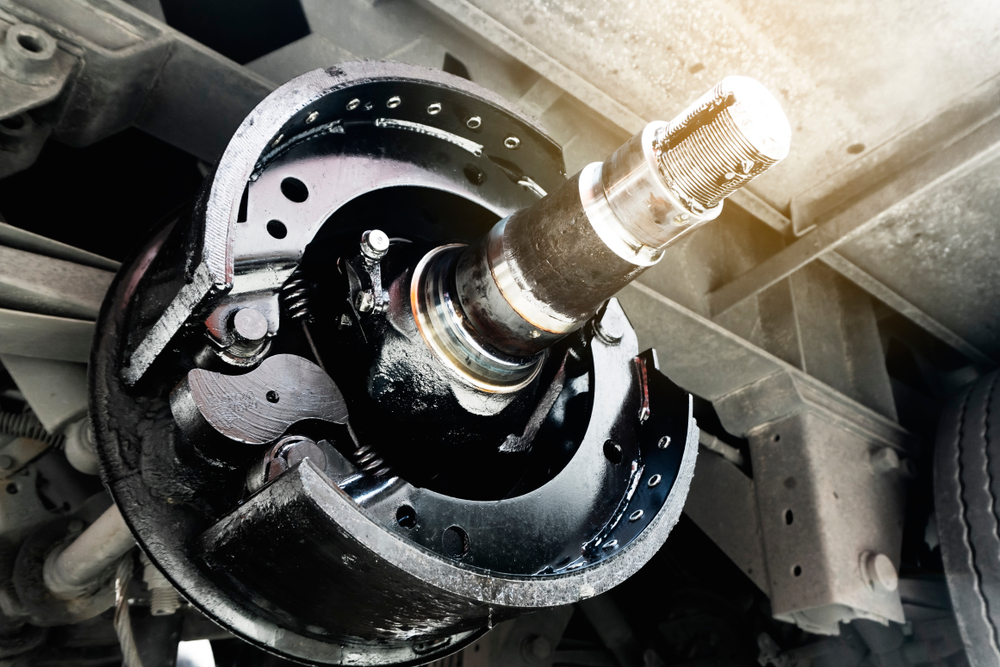
When it comes to the operation of heavy trucks, safety is always a top priority. Among the most vital safety components in any commercial vehicle are the brakes. Without a fully functional brake system, a truck becomes a significant risk to the driver, other road users, and the cargo it is transporting. Regular brake system inspections and maintenance are essential for ensuring that heavy truck brakes remain in optimal working condition, contributing to the overall safety of the vehicle and preventing costly repairs down the line. In this blog, we’ll explore why brake maintenance is so important for heavy trucks, how often brake inspections should be performed, and the signs of brake problems that truck drivers and fleet managers should watch for.
Why Heavy Truck Brake Maintenance is Crucial
The importance of heavy truck brake inspections cannot be overstated. Heavy trucks are constantly on the road, sometimes covering thousands of miles each week. The sheer weight of these vehicles, combined with the added stress of frequent stops, high-speed driving, and extreme weather conditions, puts significant pressure on the brake system. Over time, this stress can cause wear and tear on key components such as brake pads, rotors, drums, and hydraulic systems, all of which are vital for the truck’s braking performance.
Without regular truck brake maintenance, these components can deteriorate to the point where the vehicle’s braking ability becomes compromised. In worst-case scenarios, this can lead to brake failure, causing accidents or severe damage to the truck. For fleet operators, an out-of-service truck due to brake issues can result in significant downtime and lost revenue. Furthermore, serious accidents caused by faulty brakes can lead to costly liability claims, lawsuits, and insurance hikes. Therefore, maintaining the brake system is not just a safety issue—it’s also a financial and operational concern for any business that relies on commercial trucks.
The Role of Regular Brake Inspections
One of the most effective ways to maintain the braking system on heavy trucks is through regular brake inspections. Brake inspection trucks should be scheduled periodically to ensure that each truck’s brake components are functioning as expected. Typically, commercial trucks should undergo brake inspections every 10,000 to 15,000 miles or after extended periods of heavy usage. However, this can vary depending on the specific use case of the truck, such as whether it operates primarily in urban areas or on highways. Urban driving, with frequent stops and starts, places more strain on the brakes and may require more frequent inspections.
During an inspection, a technician will check various components of the braking system, including the brake pads, rotors, hydraulic fluids, brake lines, and other related systems. They will also assess the performance of the air brake system, which is commonly used in heavy trucks. Air brakes are critical for providing the necessary stopping power, and their performance should be regularly tested to ensure proper functionality.
Failing to perform regular brake inspections can allow small issues to go unnoticed, leading to more significant problems down the road. For example, a minor leak in a brake line or a slight imbalance in the air brake system might not be immediately apparent to the driver. However, over time, these issues can worsen, eventually leading to brake failure. Preventing such occurrences through regular inspections is key to maintaining safety and operational efficiency.
The Dangers of Neglecting Brake Maintenance
Neglecting brake maintenance can have serious consequences for truck drivers and their employers. The most obvious risk is the increased likelihood of accidents caused by brake failure. Heavy trucks require a significant amount of stopping power, and without properly maintained brakes, stopping distances can increase dramatically, especially when carrying a full load. This delay can be the difference between avoiding a collision and causing a catastrophic accident.
Another danger of neglected brake maintenance is the potential for costly repairs. Over time, worn-out brake pads and rotors can lead to deeper damage within the brake system. For example, if brake pads are allowed to wear down completely, the metal backing plate can grind into the rotor, causing grooves and scoring that may require costly rotor replacement. Similarly, if air brake systems are not regularly serviced, issues such as contaminated air or leaks can compromise their effectiveness, leading to more expensive repairs and replacements.
For fleet managers, the costs associated with neglected brake maintenance extend beyond repair bills. A truck that’s out of service due to brake failure can disrupt schedules, leading to delayed deliveries, loss of revenue, and frustrated customers. In the long run, this can erode the reputation of the trucking company, causing clients to seek out competitors who offer more reliable services. Therefore, investing in regular brake maintenance for commercial trucks is not only a safety measure but a way to safeguard the company’s profitability and reputation.
Identifying Signs of Heavy Truck Brake Problems
Being able to identify the early signs of heavy truck brake problems can help prevent catastrophic failure. It is essential for both drivers and fleet managers to be aware of common signs that indicate the brakes may not be functioning optimally. One of the most obvious signs of brake trouble is a noise, such as squealing, grinding, or thumping sounds, when the brakes are applied. This often indicates that the brake pads are worn out or that debris has become lodged in the brake components.
Another red flag is if the truck pulls to one side when braking. This could indicate that the brake pads are unevenly worn, or there may be an issue with the brake fluid or the air brake system. Drivers should also be on the lookout for any vibrations in the brake pedal when pressure is applied. This can be caused by warped rotors, which occur when the braking system is subjected to excessive heat, often due to prolonged or aggressive braking.
Additionally, if the truck’s stopping distance seems longer than usual or the brakes feel less responsive, this may be a sign of brake fluid leaks or air pressure issues. Leaking brake fluid can cause the system to lose hydraulic pressure, reducing braking power. If the brake warning light appears on the dashboard, it’s crucial to inspect the system immediately to determine whether the issue lies with the fluid level, pressure, or other components.
Lastly, if there is a noticeable decrease in braking power when descending steep grades or driving in challenging conditions, it may indicate an issue with the brake system’s capacity to dissipate heat. This could be a sign of overheated brakes, worn-out brake linings, or issues with the air brake system.
The Bottom Line: Safety and Efficiency Go Hand-in-Hand
The safety of truck drivers and the general public depends on the reliability and functionality of the brake system in heavy trucks. Regular brake maintenance and inspections are vital in preventing accidents, ensuring vehicle uptime, and avoiding costly repairs. For fleet operators, it’s essential to establish a proactive maintenance schedule that includes regular brake inspections to ensure that the truck brake system is always in optimal working condition. This not only enhances truck safety but also contributes to the smooth operation and financial success of the business.
Recognizing the signs of brake problems and addressing them promptly is key to preventing more severe issues down the road. Whether you are a truck driver or a fleet manager, maintaining a sharp focus on brake performance and safety should always be a priority. After all, the safety of the driver, cargo, and everyone else on the road depends on the reliability of a heavy truck’s brake system.
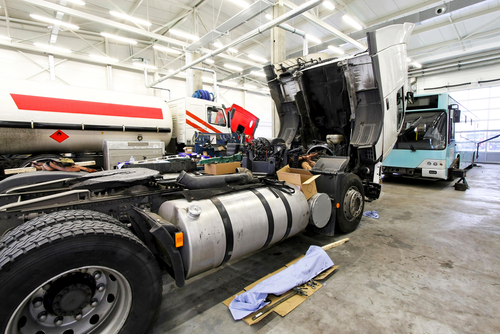
As an owner or operator of utility and heavy trucks, keeping your vehicles in top condition is crucial to ensuring the safety and efficiency of your operations. Any downtime due to mechanical issues can result in lost productivity and revenue. To help you keep your wheels turning smoothly, we’ve compiled some expert tips for utility and heavy truck repair.
Regular Maintenance is Key
One of the most important things you can do to prevent breakdowns and extend the life of your utility and heavy trucks is to adhere to a regular maintenance schedule. This includes routine tasks such as oil changes, fluid checks, tire rotations, and brake inspections. By staying on top of these basic maintenance tasks, you can catch small problems before they escalate into larger, more costly issues.
Invest in Quality Parts and Service
When it comes to maintaining and repairing your utility and heavy trucks, it’s important to invest in quality parts and service. Using inferior parts or cutting corners on repairs can end up costing you more in the long run, as these subpar components may not hold up under the rigors of heavy use. Additionally, working with experienced and reputable mechanics who specialize in utility and heavy truck repair will ensure that your vehicles receive the expert care they need to stay in top condition.
Implement a Preventive Maintenance Program
In addition to regular maintenance tasks, implementing a preventive maintenance program can help you anticipate and address potential issues before they become major problems. By tracking maintenance schedules, monitoring vehicle performance, and conducting routine inspections, you can identify wear and tear on key components and take proactive measures to prevent breakdowns.
Stay Up-to-Date on Recalls and Service Bulletins
Utility and heavy truck manufacturers regularly issue recalls and service bulletins to address known issues and ensure the safety and reliability of their vehicles. Staying informed about these updates and addressing any necessary repairs promptly can help you avoid costly breakdowns and keep your trucks running smoothly.
Monitor Fluid Levels and Quality
Proper fluid maintenance is essential for the health and longevity of your utility and heavy trucks. Regularly checking and replacing engine oil, transmission fluid, coolant, and other vital fluids is critical for ensuring optimal performance and preventing mechanical issues. Be sure to also monitor the quality of these fluids, as contaminants or degradation can indicate underlying problems that need to be addressed.
Inspect and Maintain Electrical Systems
The electrical systems of utility and heavy trucks are complex and play a crucial role in the operation of these vehicles. Regularly inspecting and maintaining the battery, alternator, starter, and other electrical components can help prevent starting issues, charging problems, and other electrical malfunctions that can sideline your trucks.
Pay Attention to Tire Care
Tires are one of the most critical components of your utility and heavy trucks, as they provide the traction and stability necessary for safe operation. Regularly checking tire pressure, tread depth, and condition can help prevent blowouts, flats, and other tire-related issues. Proper alignment and rotation of tires can also extend their lifespan and improve fuel efficiency.
Prioritize Brake Maintenance
Brake failure is one of the most dangerous and potentially catastrophic issues that can occur with utility and heavy trucks. Regularly inspecting and maintaining your trucks’ braking systems, including pads, rotors, calipers, and brake fluid, is essential for ensuring the safety of your drivers and the public. Addressing any signs of brake wear or problems immediately is crucial for preventing accidents and preserving the integrity of your trucks.
Invest in Training for Your Maintenance Staff
Ensuring that your maintenance staff is knowledgeable and skilled in utility and heavy truck repair is essential for maintaining the health and safety of your fleet. Providing ongoing training and professional development opportunities for your mechanics can help them stay up-to-date on the latest technologies and best practices in the industry. This investment in your staff can pay off in improved vehicle performance, reduced downtime, and increased operational efficiency.
Summary
Staying on top of maintenance and repairs for your utility and heavy trucks is essential for keeping your operations running smoothly and safely. By investing in quality parts and service, implementing a preventive maintenance program, staying informed about recalls and service bulletins, and prioritizing the care of key components such as tires, brakes, and electrical systems, you can ensure that your trucks remain in top condition for years to come. Remember, a well-maintained fleet is not only a smart business decision but also a critical factor in protecting the safety of your drivers and the public.
Need Heavy Equipment Services in Lexington, OR?
Bailey Heavy Equipment Repair, Inc. is a family-owned and -operated heavy-duty equipment repair service based in Lexington, Oregon since 1984. We specialize in providing for all of your equipment repair needs, whether it’s farm equipment, utility equipment, trucks, cylinders, or something else entirely. We offer ANSI Inspections and Dielectric testing, field repair and on-site repair, line boring services, welding, machining, hose assemblies, steel sales, and other machine products. Give us a call today for more information!